

by Nell Leyshon
16 – 25 April 2026
This charming ‘play with songs’, inspired by real life events, contrasts the urban sophistication of Cecil Sharp, the renowned collector of folk songs, with the simple lives of two sisters he meets in Somerset in 1903. The younger sister, illiterate Louie, has something Sharp wants – she has over 300 folk songs in her head learnt from her recently deceased mother. Sharp wants to take these songs and integrate them into his music and indeed publishes them uncredited, but for Louie they are a constantly evolving part of the land that she grew up in and cannot be captured and frozen in time. A wonderful play about the power of music, rural identity and grief.
Folk was first produced as a BBC radio play and then at the Hampstead theatre where it gathered an Olivier award nomination.
This was an amateur production.
Cast
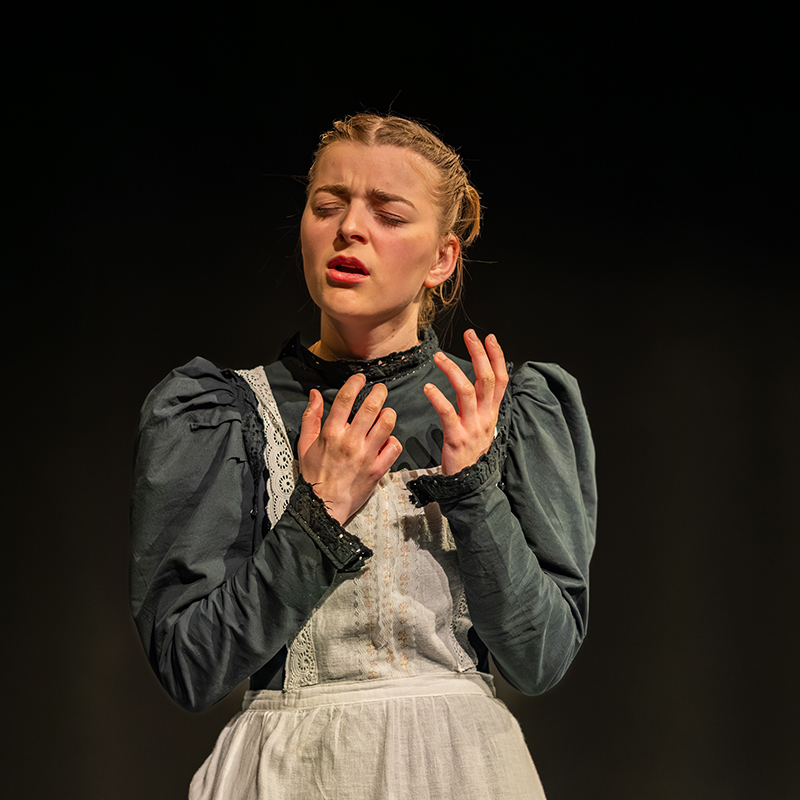
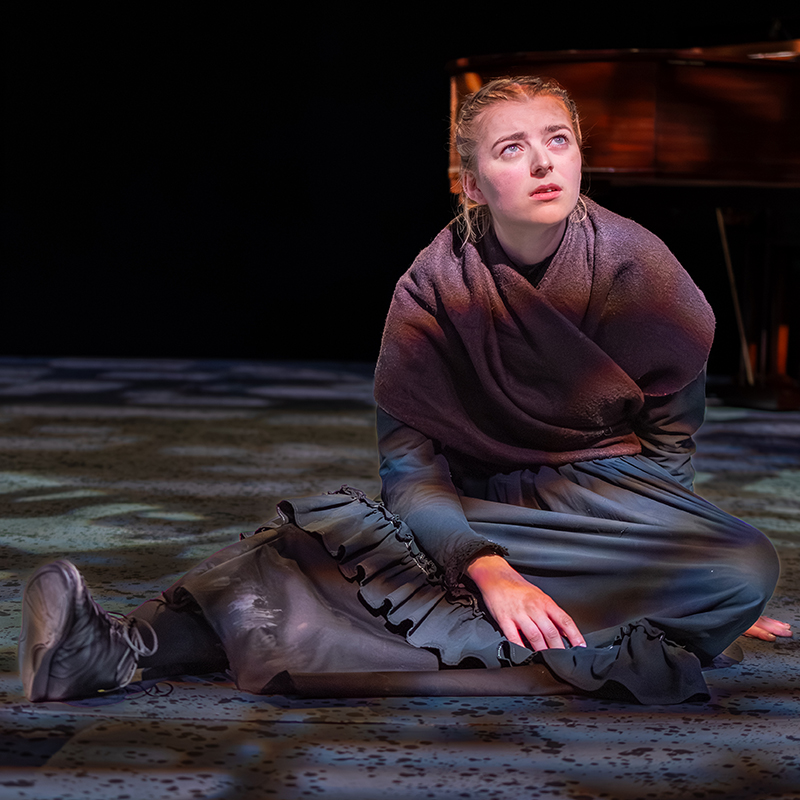
Louie Hooper | Sophie Moss
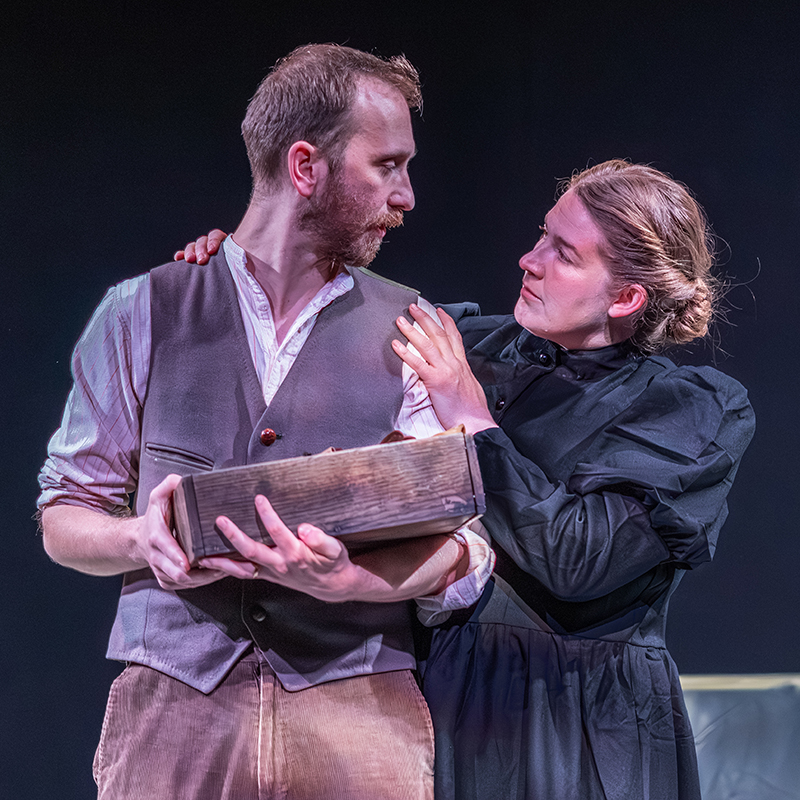
Lucy White | Neve Faulkner
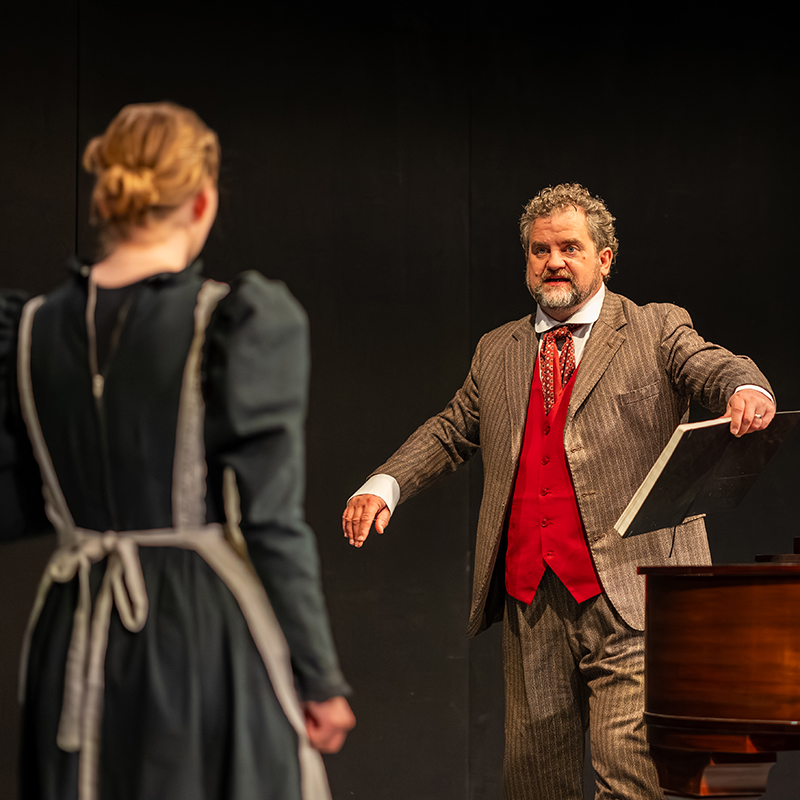
Cecil Sharp | Chris Chambers
John England | Matthew Stone
Directed by Mike Millsted


Photography by Chris Fenton
Review | May 2026 | Theo Spring
The vital requirement for this production was finding a cast who could not only sing beautifully, unaccompanied, but able to combine that skill with the ability to act. This, Director Mike Millsted achieved, to the highest degree.
Set in 1903 in Somerset, the play charts the origins of many folk songs as sung by the folk of the area but, as they were passed through the generations by voice only and were not written down, they could possibly have died out.
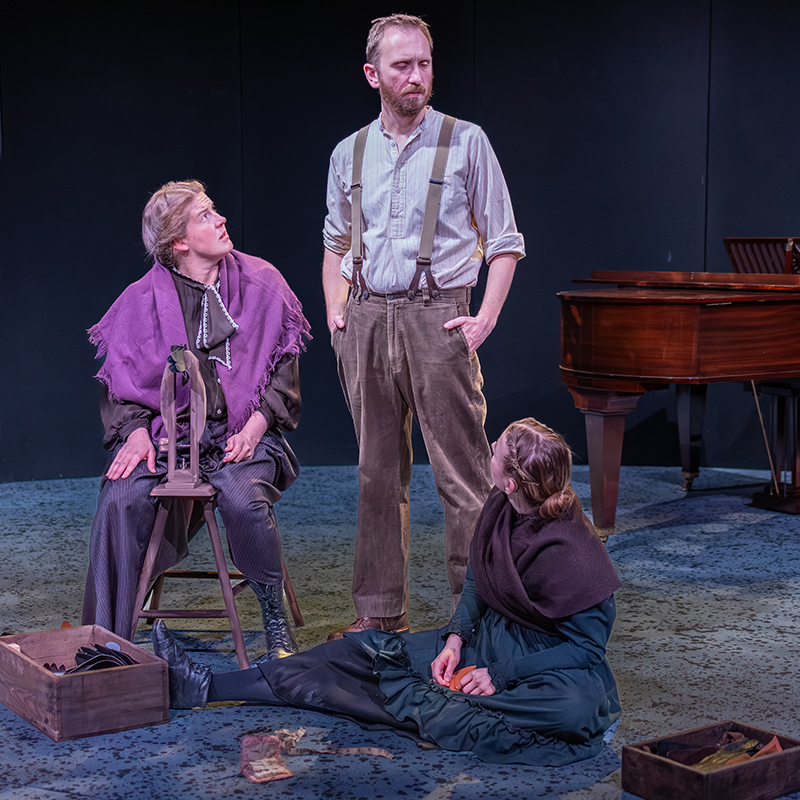
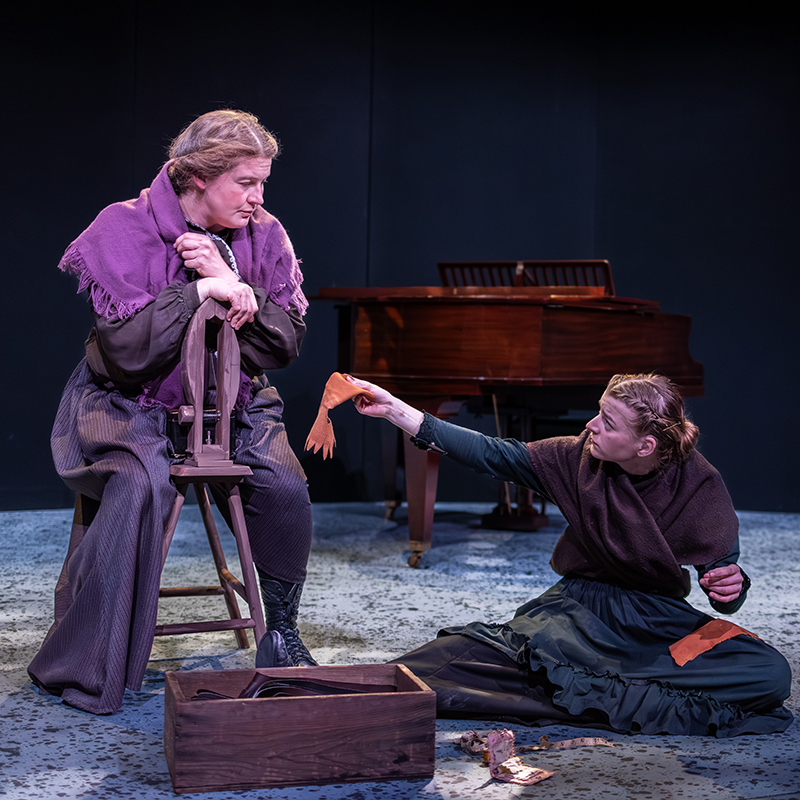
Stepsisters Louie and Lucy have just buried their mother – the source of hundreds of these words and tunes, and it was Louie who was the main keeper of this heritage, with Lucy also knowing many of them. The sisters earnt their living through making gloves, but with the threat of mechanisation coming ever closer. The songs were often sung whilst sewing. With the most beautiful voice, Sophie Moss as Louie brought all the echoes of love, longing, and the fields and pastures of her surroundings to the songs she sang, combining the need to show a lameness in her gait and a mild shyness which finally turned to anger.
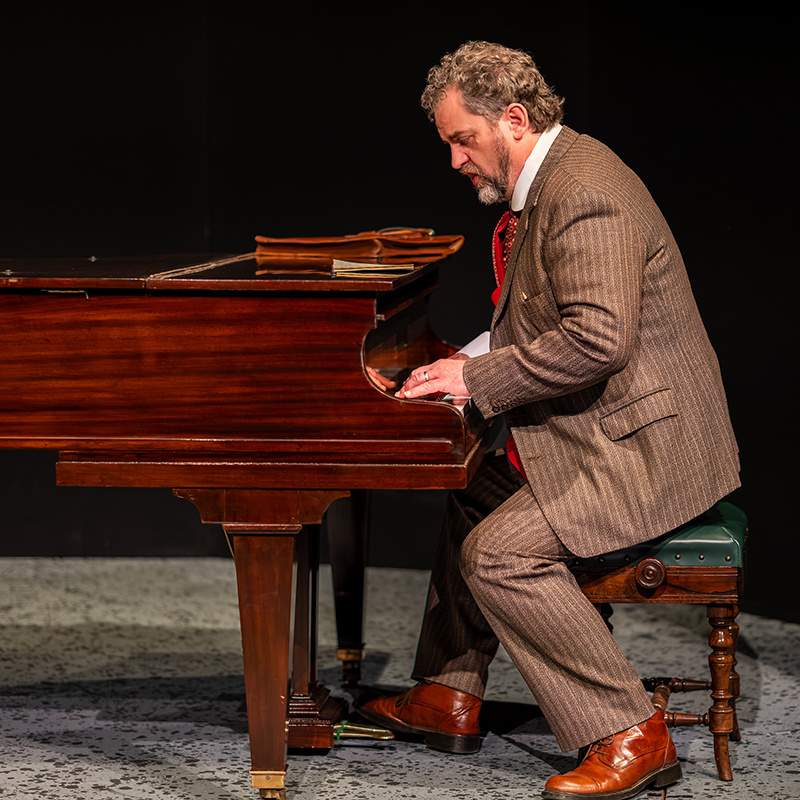
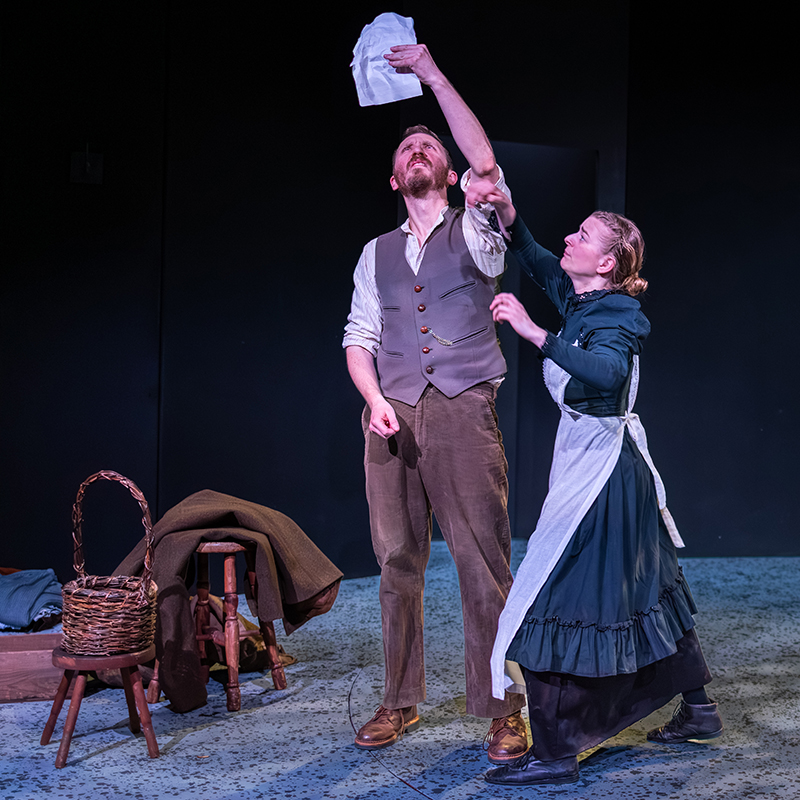
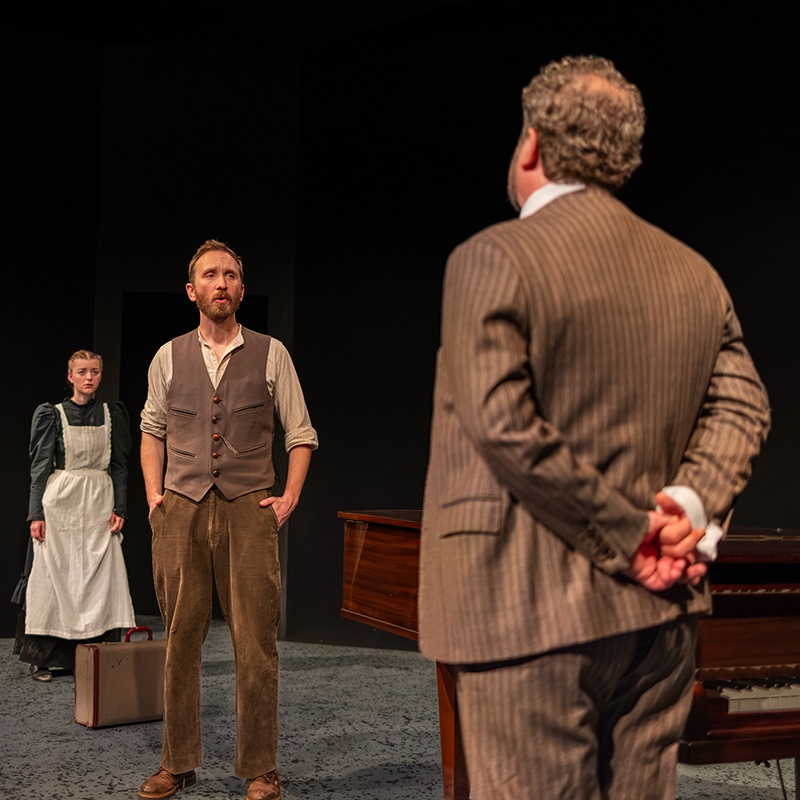
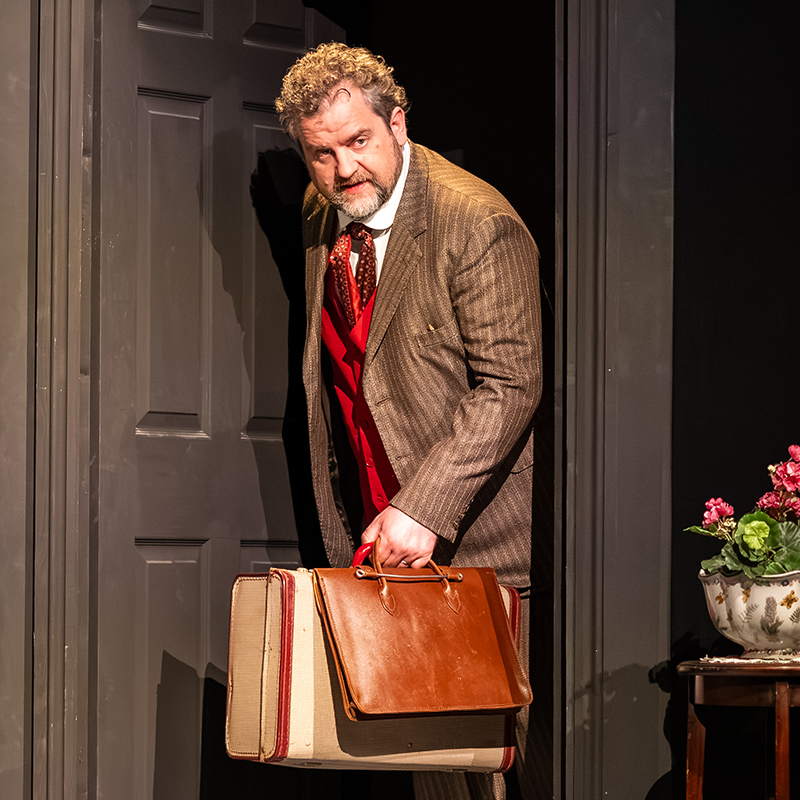
As the more practical of the sisters, Neve Faulkner as Lucy, also with a lovely voice, had visions of leaving Hambridge, having set her cap at the local gardener, John England, played by Matthew Stone. A down-to-earth character, again in good voice, he takes what he can get from Lucy, but has his sights set on emigrating – with a single one-way ticket. Into this rural scene steps Cecil Sharp, an historical character, renowned for his published collection of folk songs. Chris Chambers created a Sharp able, it seemed, to charm the hind leg off a donkey, and he used this ability to wheedle songs from the very reluctant Louie. He wanted to notate and publish them, whilst she tried to make him see how the songs were part of the narrative of the area, as she invited him to walk with her through the fields which had inspired many of the song’s words.
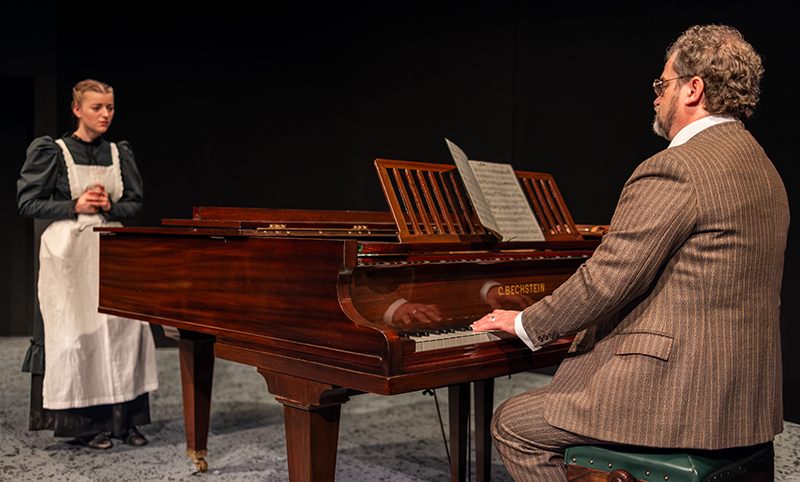
A plain, uncluttered set, designed by Mike Millsted and Natalie Jones with a simple background and very little furniture was in keeping with poverty of the sister’s working cottage, whereas the grand piano found in the drawing room of the Vicarage, where Sharp came to stay and which Chris Chambers played so expressively, was moved more central on the revolve when required. It was the need for more money that sent Louie to the Vicarage, as a parlour maid, and thus the story unfurled.
Lighting was all important here, with atmosphere so well created by James Denny and Jonathan Mash, and it was Jonathan again with Mike Millsted who were responsible for the all-important sound.
To help achieve such evocative a cappella singing, Music Consultant Hannah Cummings added her expertise to the show, and both the sisters and John paid good tribute to the Somerset accent.
Wardrobe Mistress Berry Butler achieved just the right divide between the ‘have’s’’ and the ‘have nots’, with black being the universal colour for the sister’s costumes.
The show brought a gamut of emotions to the story, all carefully nuanced, but memorably, the closing moments as the sisters sat together outside their cottage, bathed in increasingly bright moonlight, stayed in the mind.
A harmonised curtain call song showed off all four fine voices once again.
This play, by Nell Leyshon, could only be considered to be presented on the amateur stage if there are cast members who can truly sing. Mike Millsted was blessed with four of them who had consummate acting skills too, and he delivered an interesting, historical and truly charming play which had the audience spellbound.