

by Hugh Whitemore
5 – 14 March 2026
This is an exceptional biographical drama about eccentric genius Alan Turing. He played a major role in winning World War II by breaking the complex enemy code known as Enigma. Since his work was classified as top secret for years after the war, no one knew how much was owed to him when he was put on trial for breaking another code; the taboo of homosexuality. Turing, who was also the first to conceive of computers, was convicted of the criminal act of homosexuality and sentenced to undergo hormone treatments which left him physically and mentally debilitated. He died by suicide, forgotten and alone. This play is about who he was, what happened to him and why.
This amateur production of ‘Breaking the Code’ is presented by arrangement with Concord Theatricals Ltd on behalf of Samuel French Ltd. concordtheatricals.co.uk.
Cast
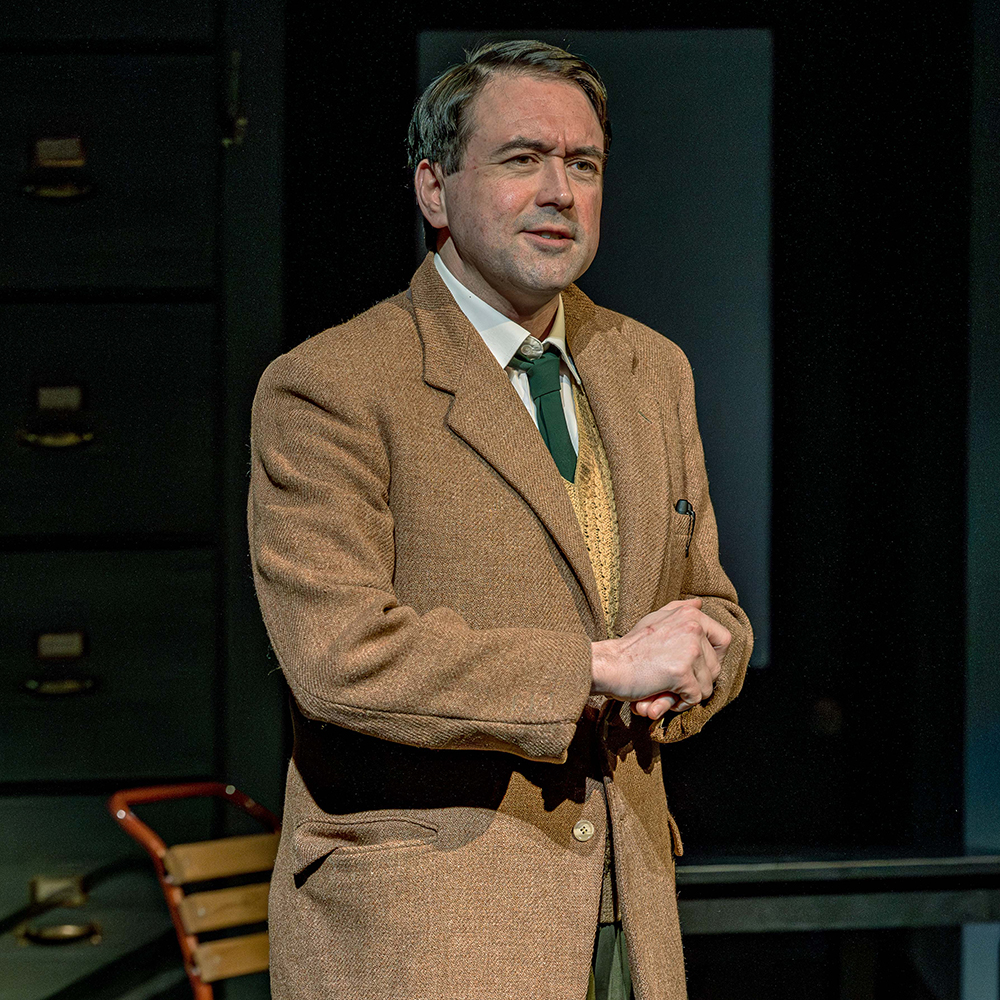
Alan Turing | Adam Stevens
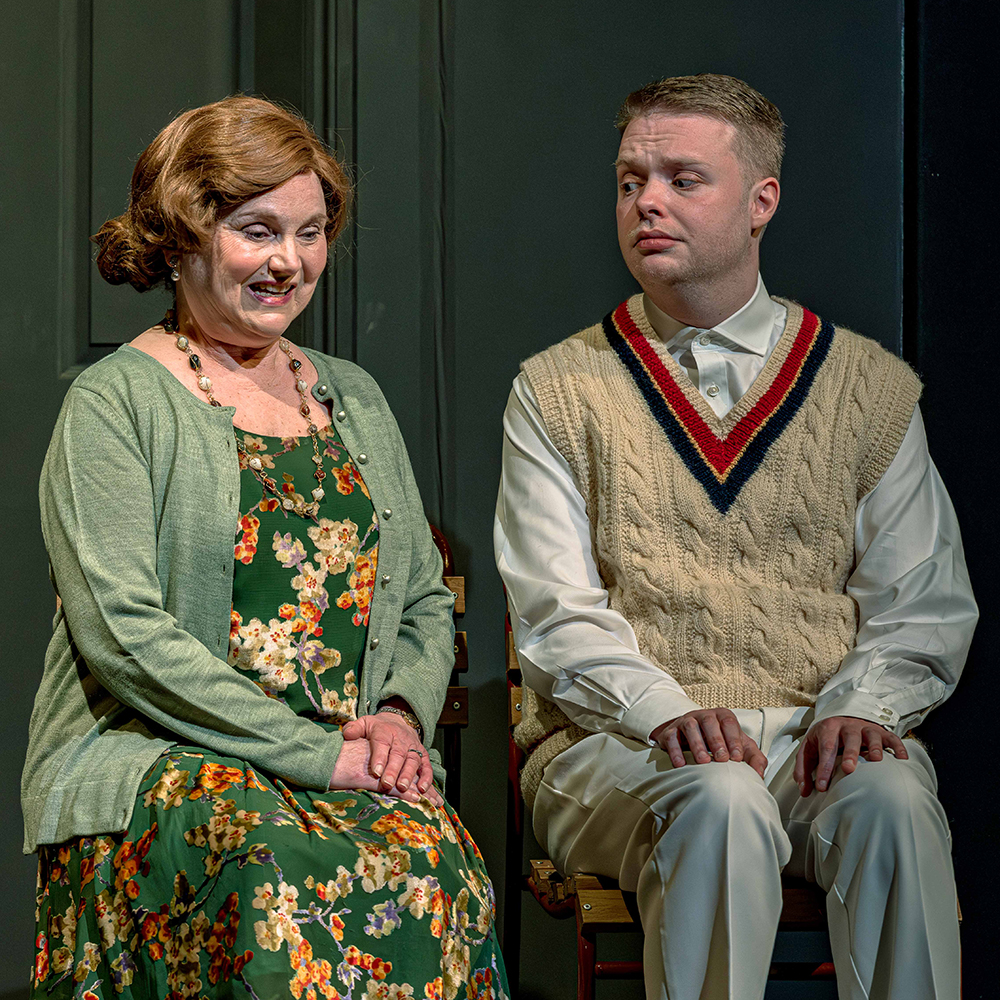
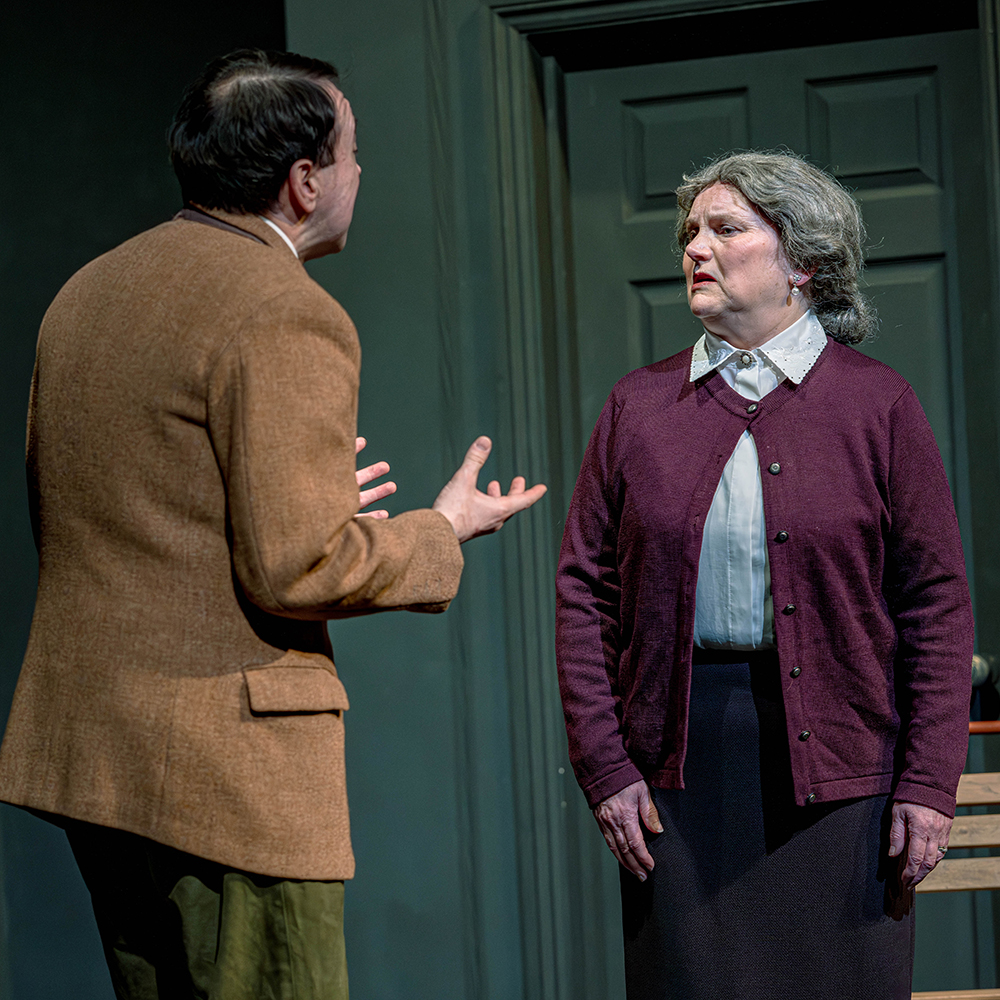
Sara Turing | Andrea Unwin
Ron Miller | Sam Norris
Dillwyn Knox | Chris Hannigan
Pat Green | Lucinda Banton
Christopher Morcom | Alfie Bird
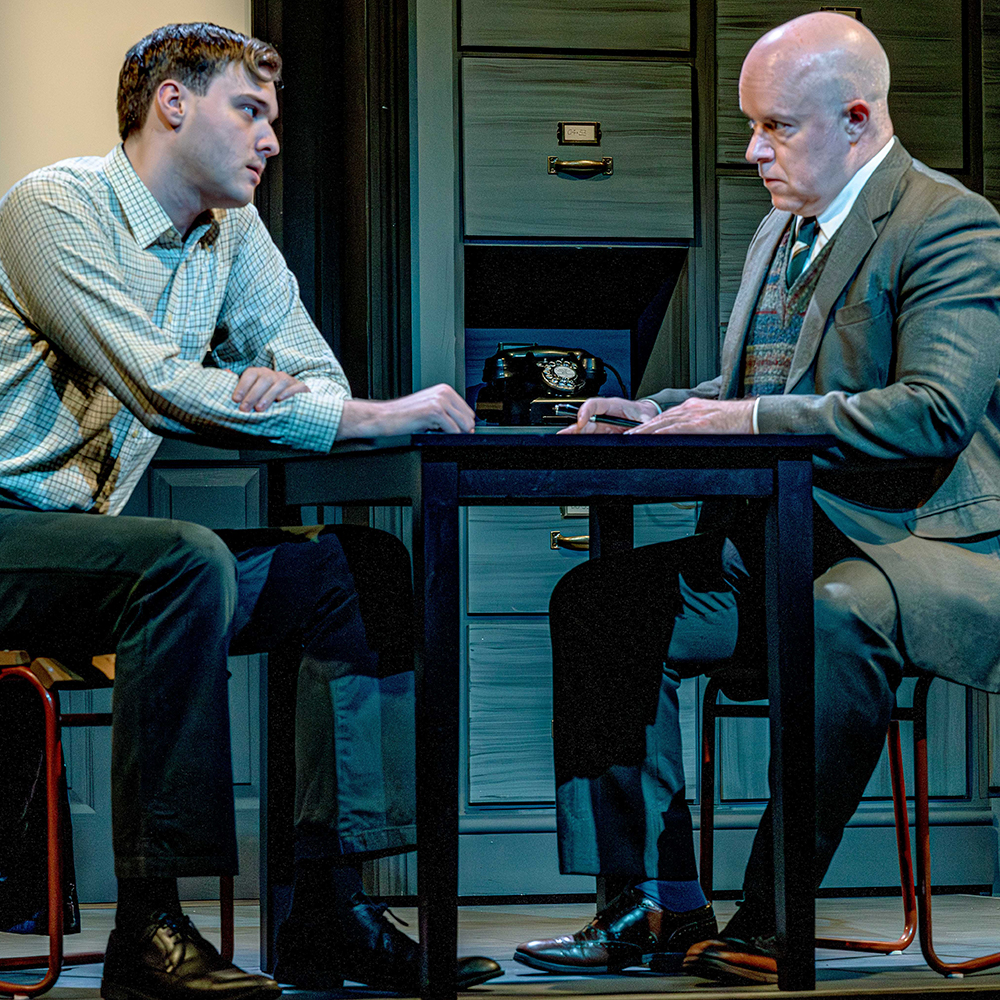
Mick Ross | Jan Kool
John Smith | Jamie Heath
Directed by Peter Shore
Photography by Pete Mayo
Review | March 2026 | Theo Spring
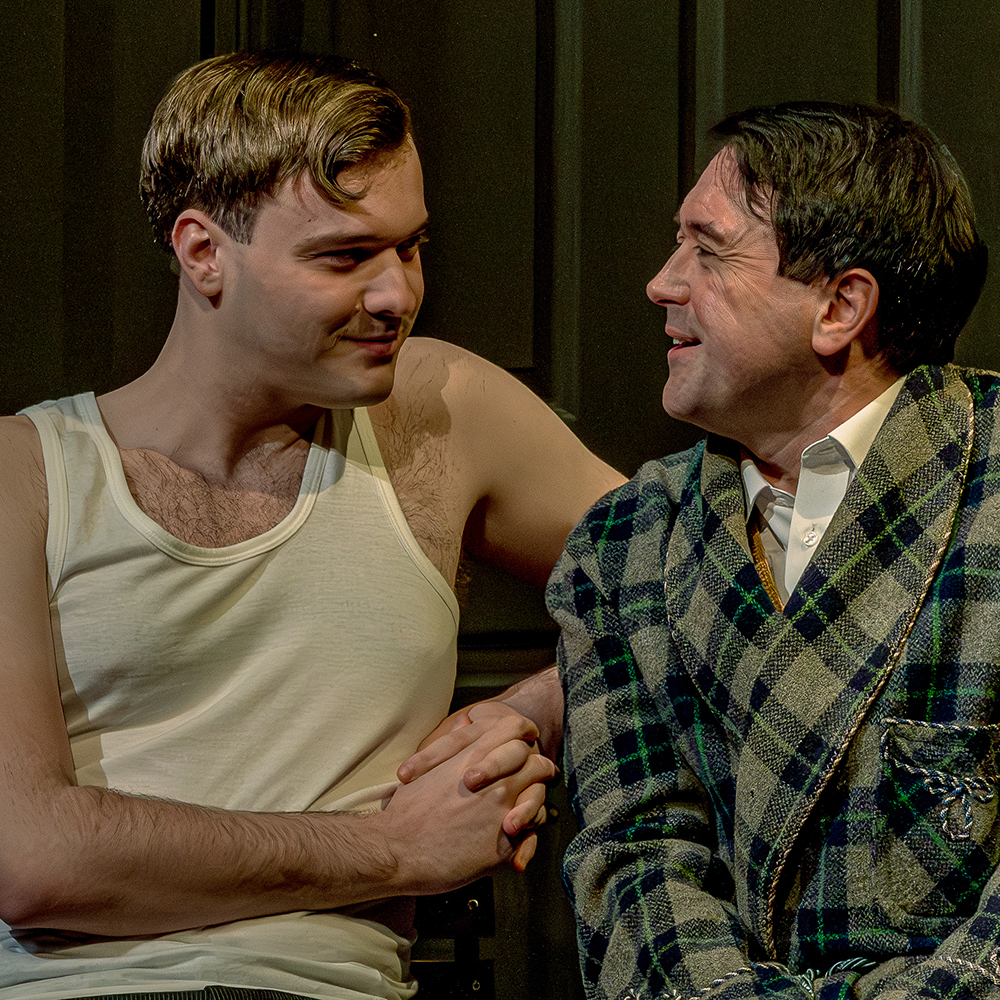
When playwright Hugh Whitemore wrote Breaking the Code in 1986 he scripted a highly demanding role for his lead character of Alan Turing. Without a strong lead with exceptional acting ability the play could not do sufficient justice to its central character. Here Adam Stevens fulfilled this brief and delivered a truly outstanding performance. As the mainstay of the play with a huge number of lines to learn – many of which dealt with complicated details, he showed Turing both in full flight mathematical zeal and in his softer dealings with his sexuality – Turing’s famous ability to break the wartime Enigma Code and to also break the morality code of the time – the Criminal Law Amendment Act 1885, thus giving the title of the play a double meaning. To have been able to cast Adam Stevens in this role raised the production to a professional level, not the least assisted by the rest of the stellar cast.
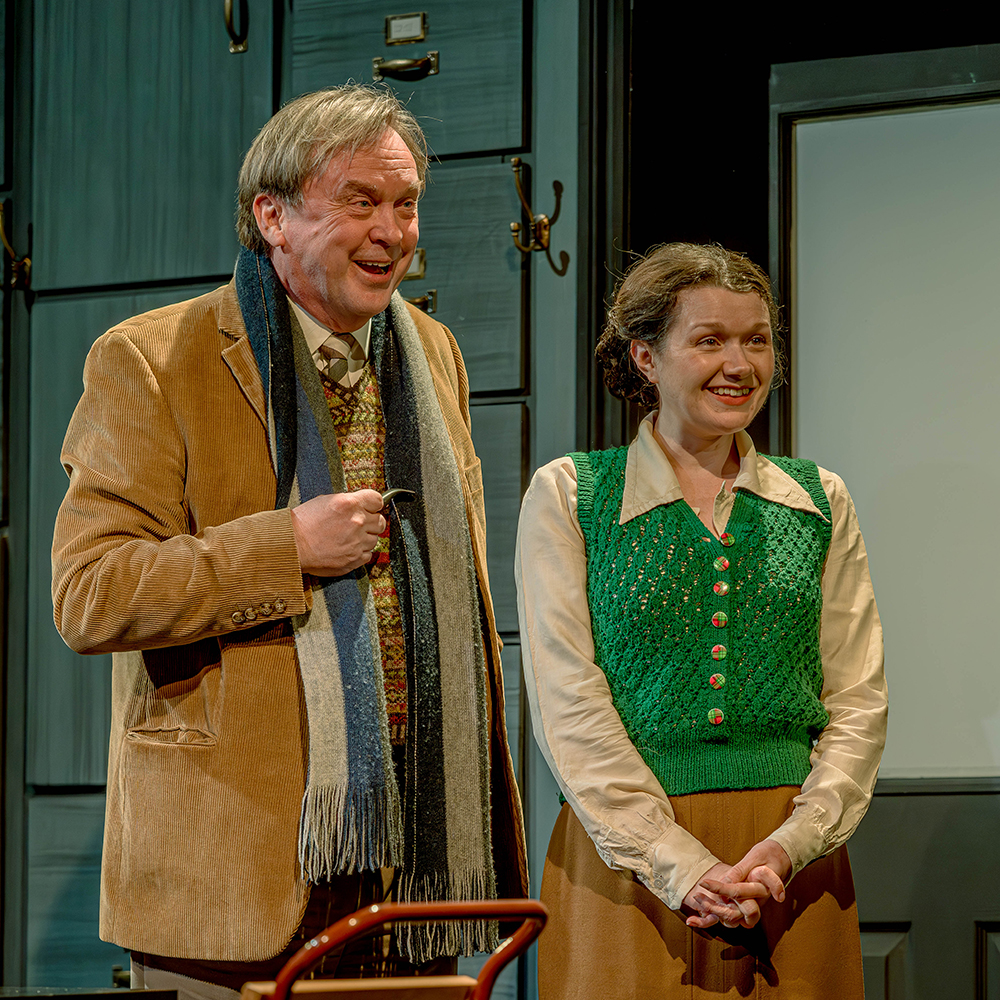
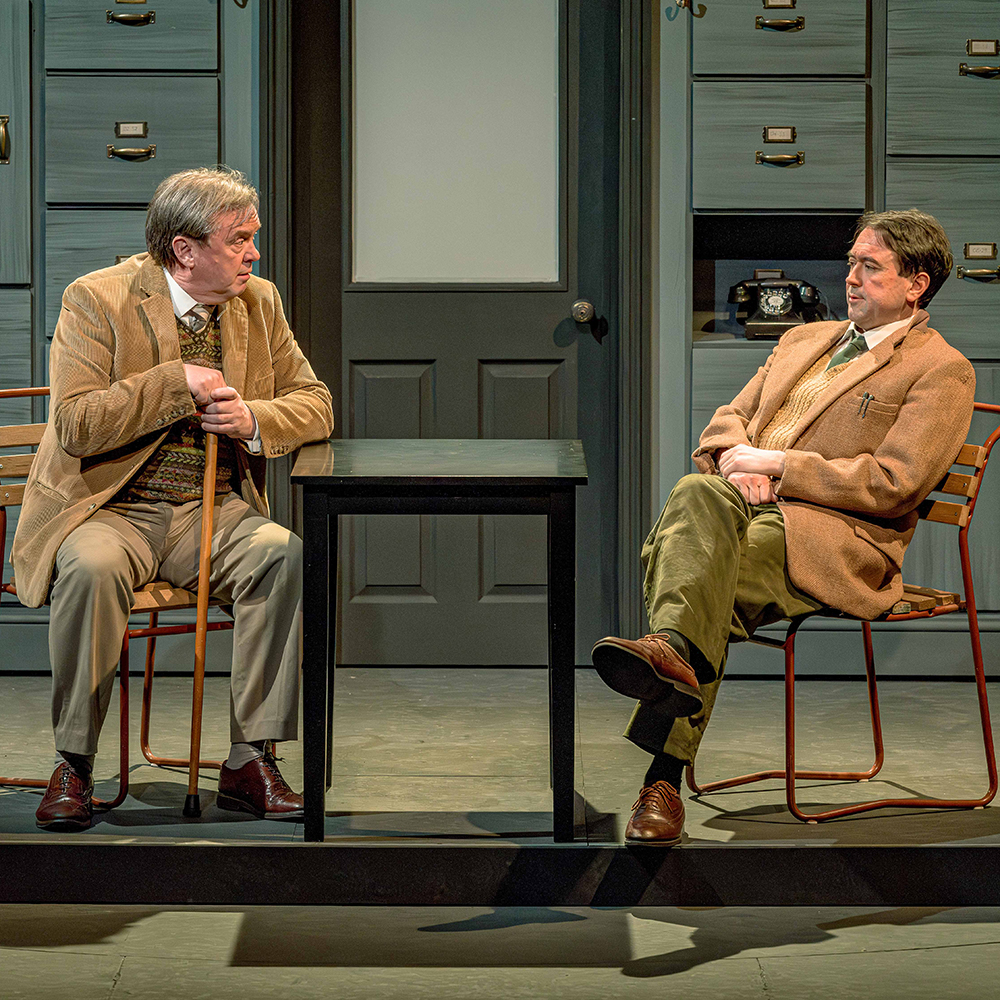
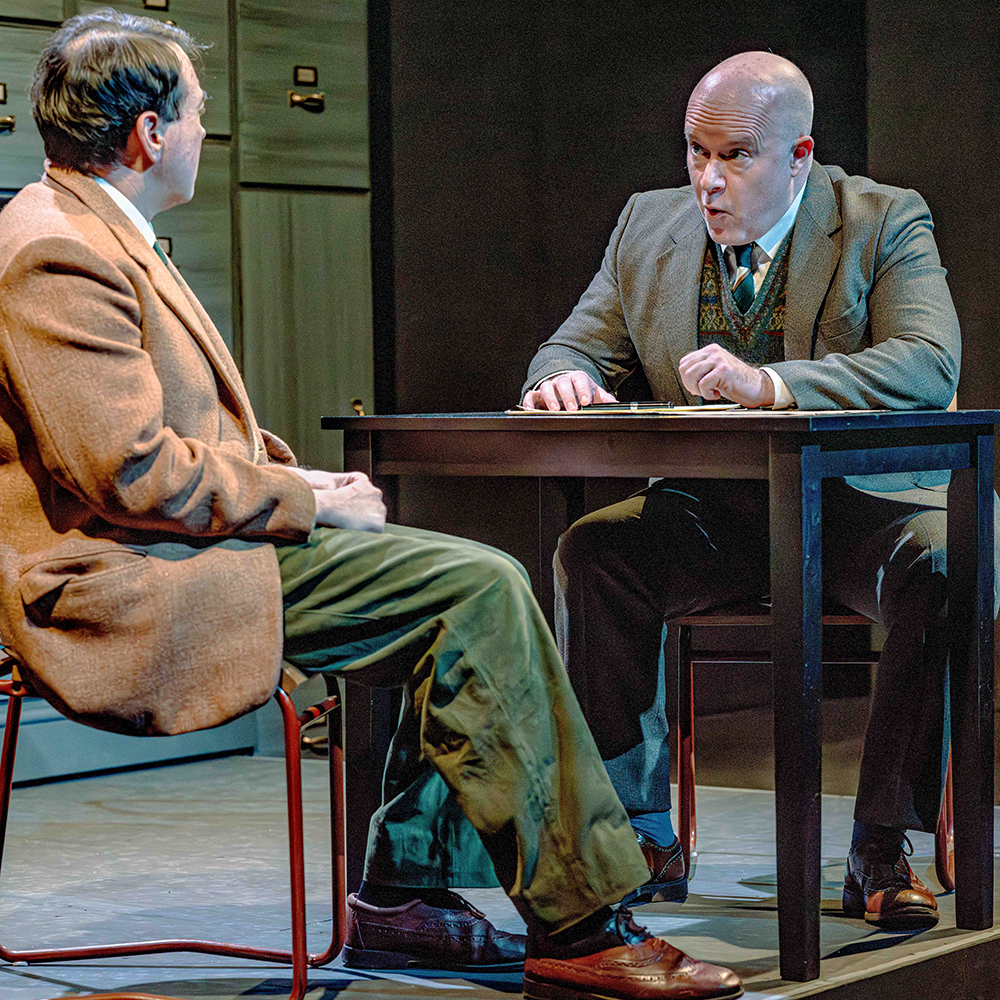
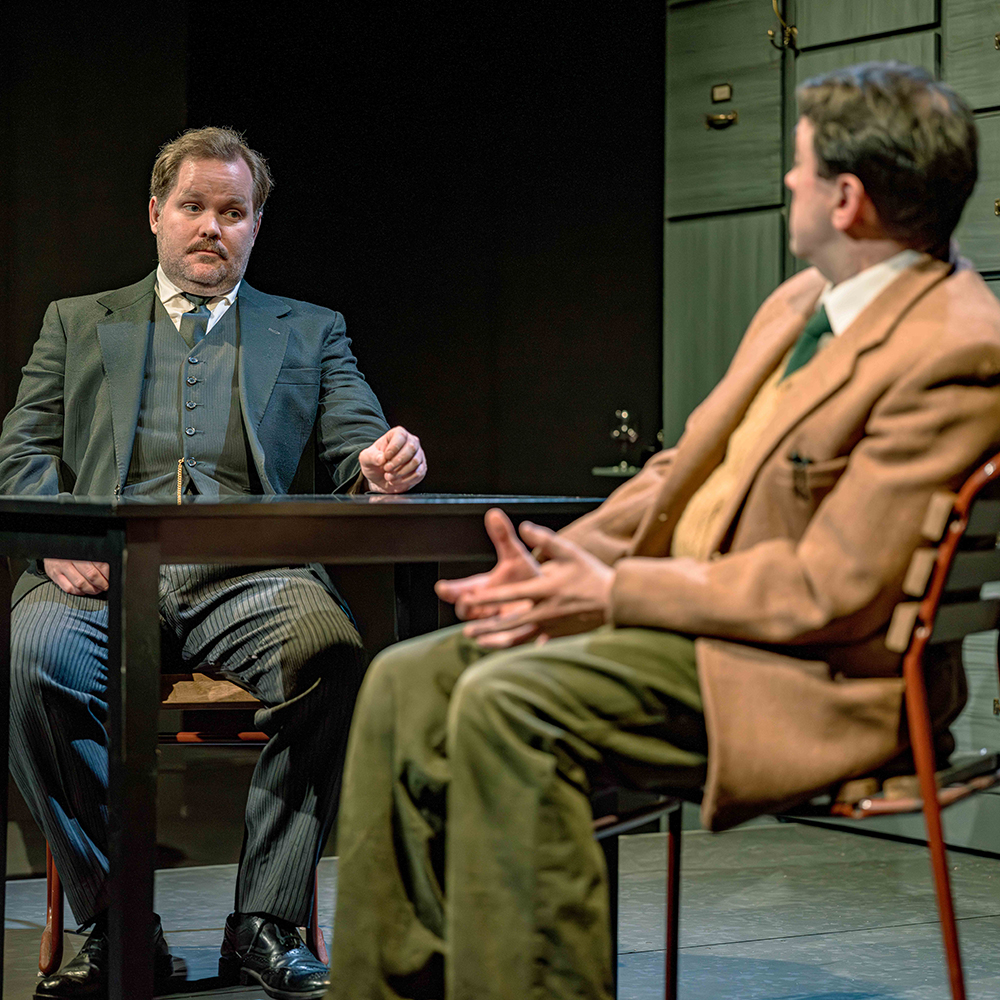
Although the playwright deals with Turing’s huge problem-solving abilities in the many format with which he became involved over his lifetime, he reveals much of the events that influenced Turing’s life. The play is set in various locations between the years of 1928 and 1954 and it is due to the cleverest of sets, designed by Keith Orton, that the scenes flow really smoothly into one another. A very effective ‘backdrop’ of many different sized door fronts was built vertically. Some of these were real and able to be opened during certain scenes, and some were simple frontages. A central half—glass door within this backdrop allowed mostly authoritarian characters egress onto a small platform where a simple table and two chairs were set throughout the production. Ingenuity and very smooth construction allowed this platform to be pushed out and then withdrawn when stage space in front of it was needed. Full marks here to Roger Astley and his large set construction team.
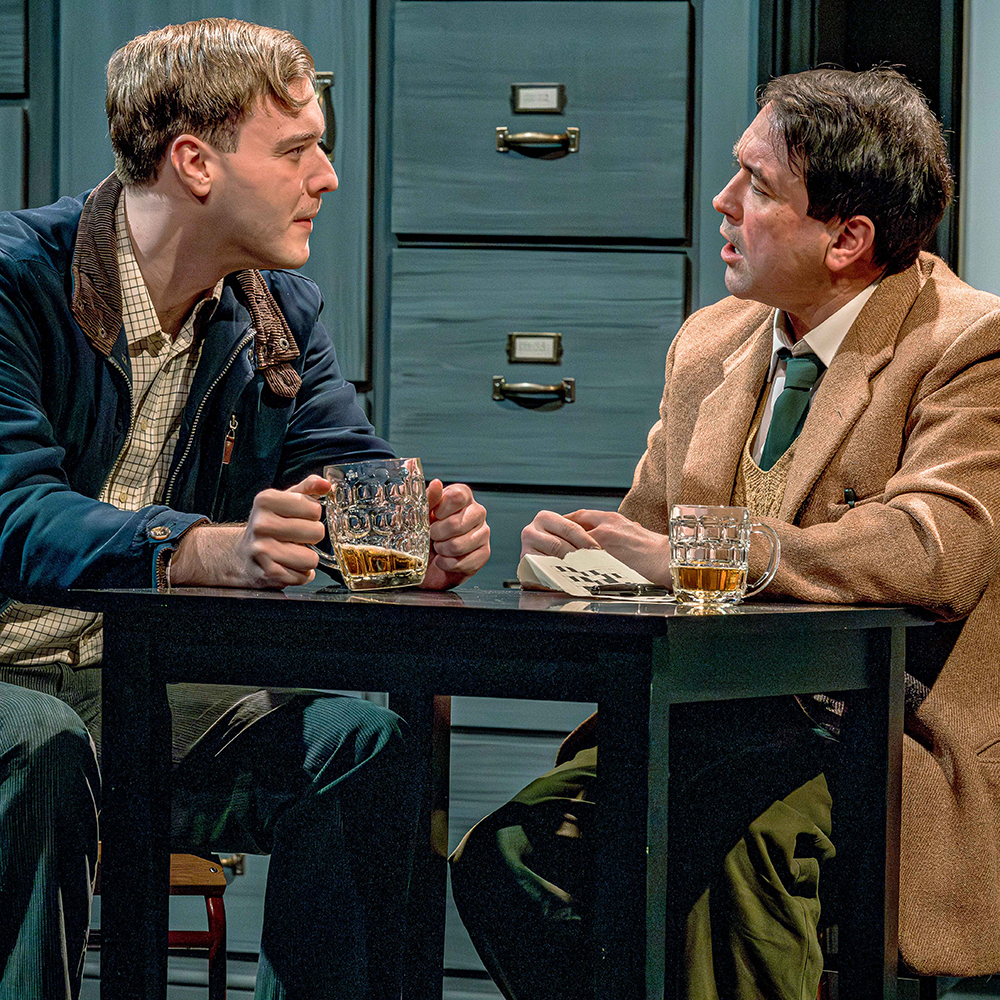
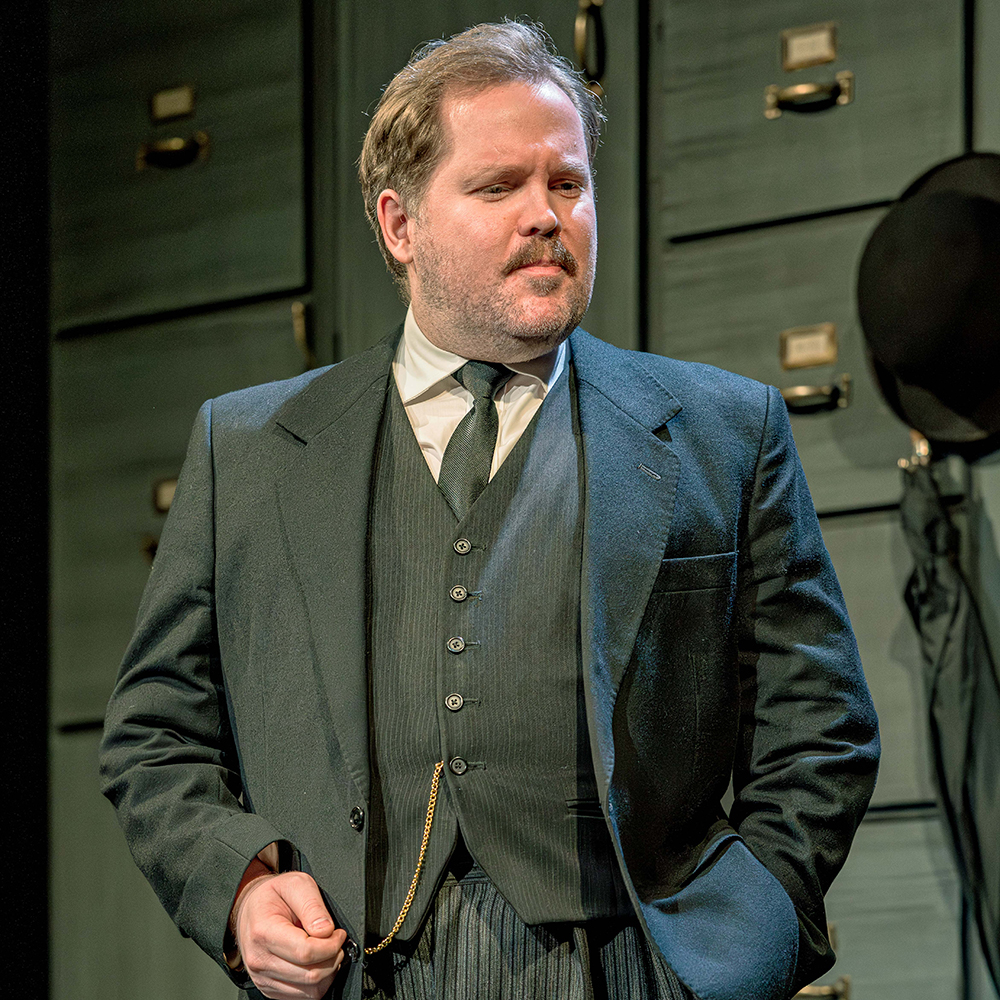
This dais provided the venue for many of the scenes of questioning, commencing with what seemed like a routine burglary reported by Turing, with Jan Kool as Mick Ross defining, once more, his enigmatic ability to question; this being is third role over time, as a Detective. It is Ross who helps to take this questioning from a simple burglary to a full-blown conviction of gross indecency for which Turing was convicted and given a choice between prison and a probation sentence which included hormonal treatment. Turing chose the treatment. Two further authoritarian characters involved were Dillwyn Knox and John Smith. Chris Hannigan played the slightly scatty unorthodox Dillwyn to great effect – putting Turing at ease during what were more like discussions than questioning sessions, whilst Jamie Heath as the very senior John Smith made impact during his brief appearances.
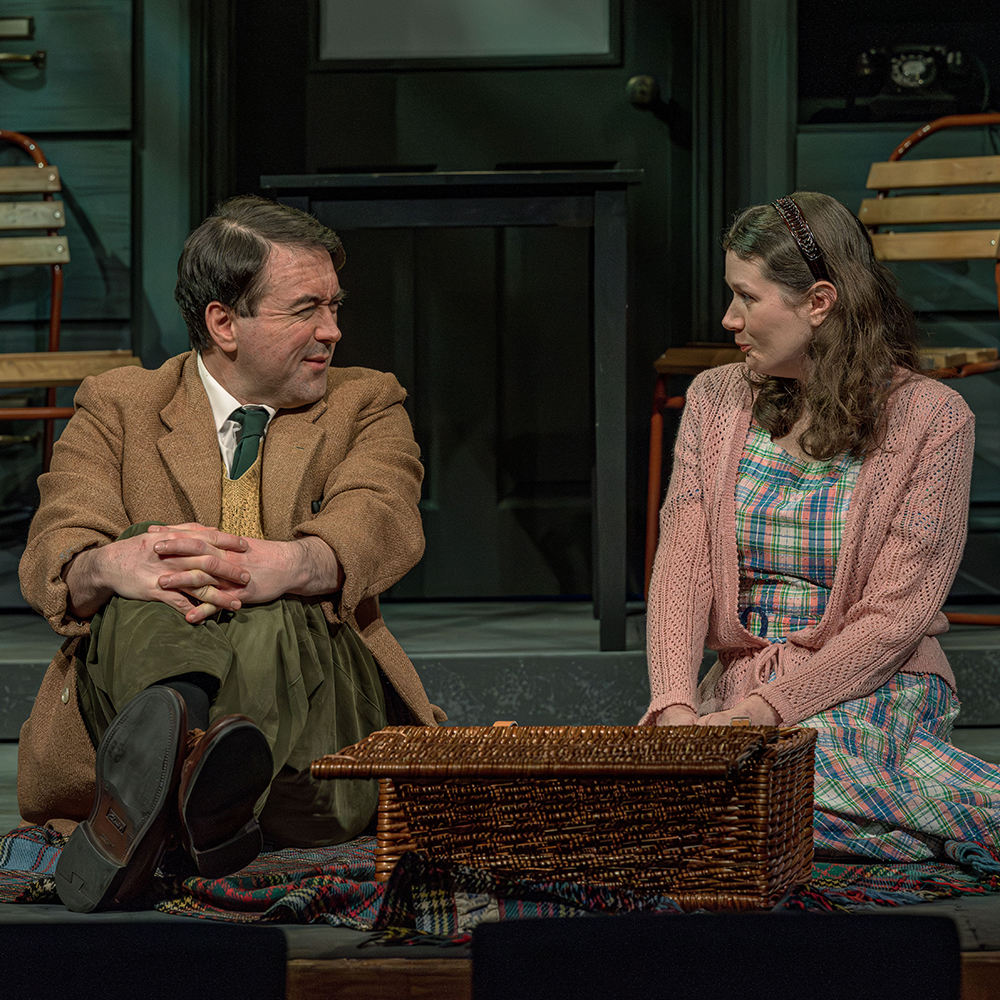
The play reflects on Turing’s affection for fellow Sherborne School pupil Christopher Morcom, whose early death affected Turing deeply and here brought to life by Alfie Bird in a gentle depiction. It deals with a mother – Sara Turing – wholly grounded in the niceties of life and seemingly wholly unaware of her son’s ground-breaking abilities. Andrea Unwin’s Sara found visible signs of affection hard but was thrilled to show her son the new curtains in the bedroom, recently refurbished.
It was the advent of Ron Miller, in the play, which started Turing’s downfall. Admitting to sleeping with Turing, Sam Norris, as Ron, delivered a gung-ho chancer of a character helping to create believable scenes of the event and later, as the voice of Nikos, delivering some effective Greek.
In the references to Turing’s famous work in Hut 8 at Bletchingly, we met Pat Green so effectively played by Lucinda Banton, who fell in love with Turing and, even knowing he was a homosexual, still wanted to marry him.
The depiction of Turing’s possible suicide was given a brief but definitive scene. An apple, tossed lightly in the air and caught, several times, as if pondering an action, and a small tub of potassium cyanide. The apple smeared and a bite taken. It may be apocryphal but, if true, would be a lasting and apt reminder of Turing’s huge gift to today’s computing world, that the Apple logo on so many items we may use depicts an apple with a bite taken out of it, in tribute to a man to whom so much is owed.
Breaking the Code is a long play but the audience were held throughout by acting of the highest standard and a story which we should all know. Peter Shore directed his cast with the hand of exceptional experience, creating a play which was greeted with deserved applause, loud and long – together with the curtain call for Adam Stevens who, for the duration of the production, had truly become Alan Turing.